
How many units do I need?
Start with headcount and hours, not guesswork. OSHA 1926.51(c) sets construction ratios: 1 toilet for 20 workers or fewer, then 1 toilet seat and 1 urinal per 40 workers once you pass 20, dropping to one seat and urinal per 50 workers at 200 or more. For a crew of 25 working a job in East Los Angeles, that means two units minimum once you add a buffer for breaks. Farm crews fall under a different rule: OSHA 1928.110 requires field sanitation within a quarter mile walk, one facility per 20 hand-labor employees, which matters for growers checking farm and agricultural restrooms. Events run on headcount and hours rather than a fixed OSHA table. Use the how many porta potties do I need guide for exact math, and check OSHA portable toilet requirements before you finalize a jobsite order. Weekend rates run cheaper per unit than daily rentals stacked back to back, something worth asking about when quoting a two-day block through porta potty rental cost.
What type of unit fits the job?
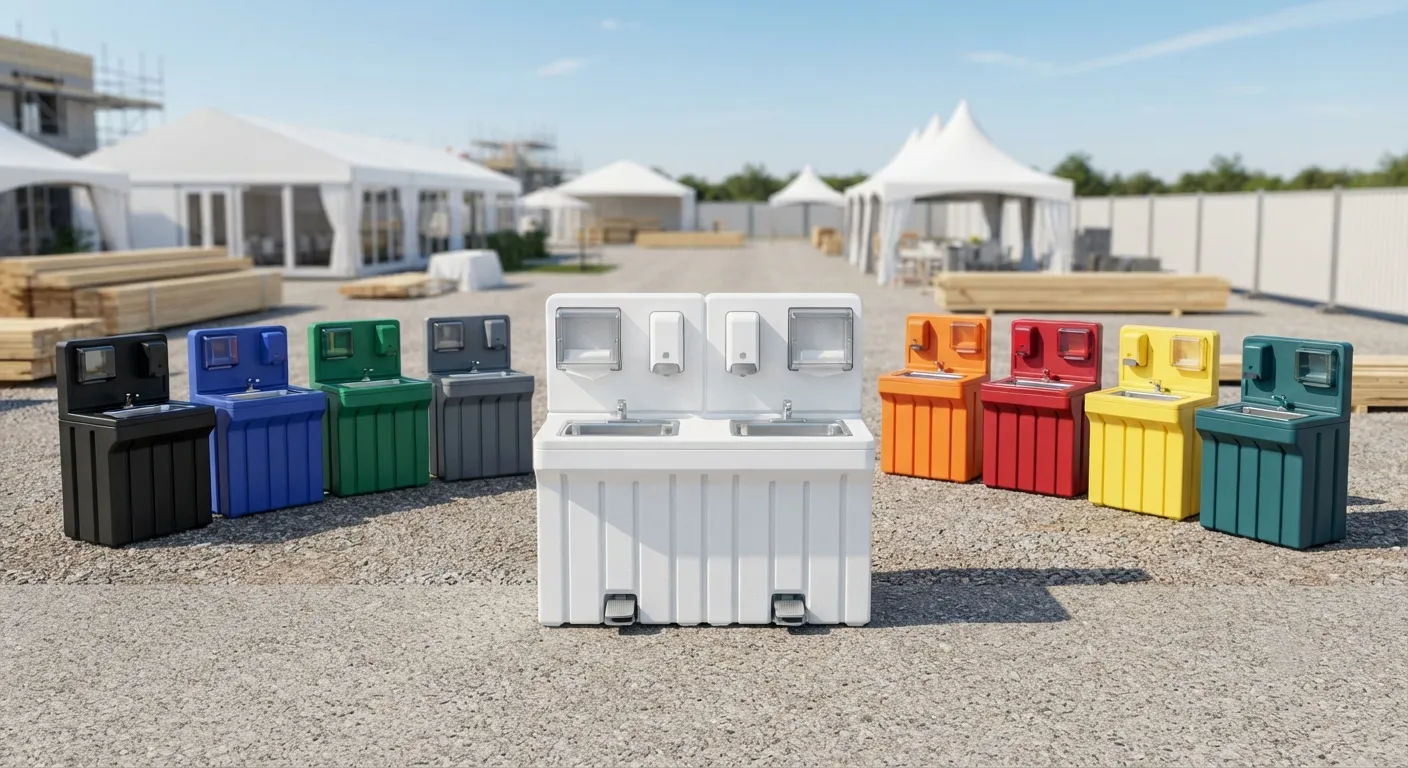
A standard unit works for most construction and yard projects: it holds a 60 to 70 gallon tank, stands about 92 inches tall, and sits on a 44 by 48 inch footprint, per standard porta potty rental specs. Weddings and corporate events usually upgrade to a deluxe flushable porta potty or a full restroom trailer rental, sized from 2 stall up to 8 stall depending on guest count. Any cluster of single-user units triggers ADA Standards section 213.2: at least 5 percent of units, and never fewer than one, must be accessible. That accessible unit needs a 60 inch turning circle under section 304.3.1 and a door opening of at least 32 inches per section 404.2.3. Confirm those specs on the ADA accessible porta potty page before ordering, and pair it with a portable sink rental or handwashing station rental if the job involves food service or painting, since OSHA 1926.51(f)(1) requires washing facilities specifically where workers apply paints, coatings, herbicides or insecticides.
Where should units be placed on site?
Placement rules exist for a reason: firm ground, real clearance, a route someone in a wheelchair can actually use. ADA Standards section 302.1 calls for stable, slip-resistant surfaces, and section 403.5.1 sets a 36 inch minimum clear width on the path leading to the unit. Keep operable door handles within reach per section 308.2.1, no higher than 48 inches, and workable with one hand under section 309.4. If a ramp is needed to reach a trailer entrance, section 405.2 caps the slope at 1:12. Service trucks need room too. A roll-off delivery needs about 60 feet of straight clearance behind the truck, which matters just as much for a restroom trailer rental or storage container rental drop as it does for a dumpster. Placement on East Los Angeles job sites near property lines or the public right of way needs confirming with the city before delivery day. Check the porta potty placement guide and porta potty permit requirements pages, since permit rules vary by site and were not verified for this page.
Should I book a trailer, a septic pump, or both?
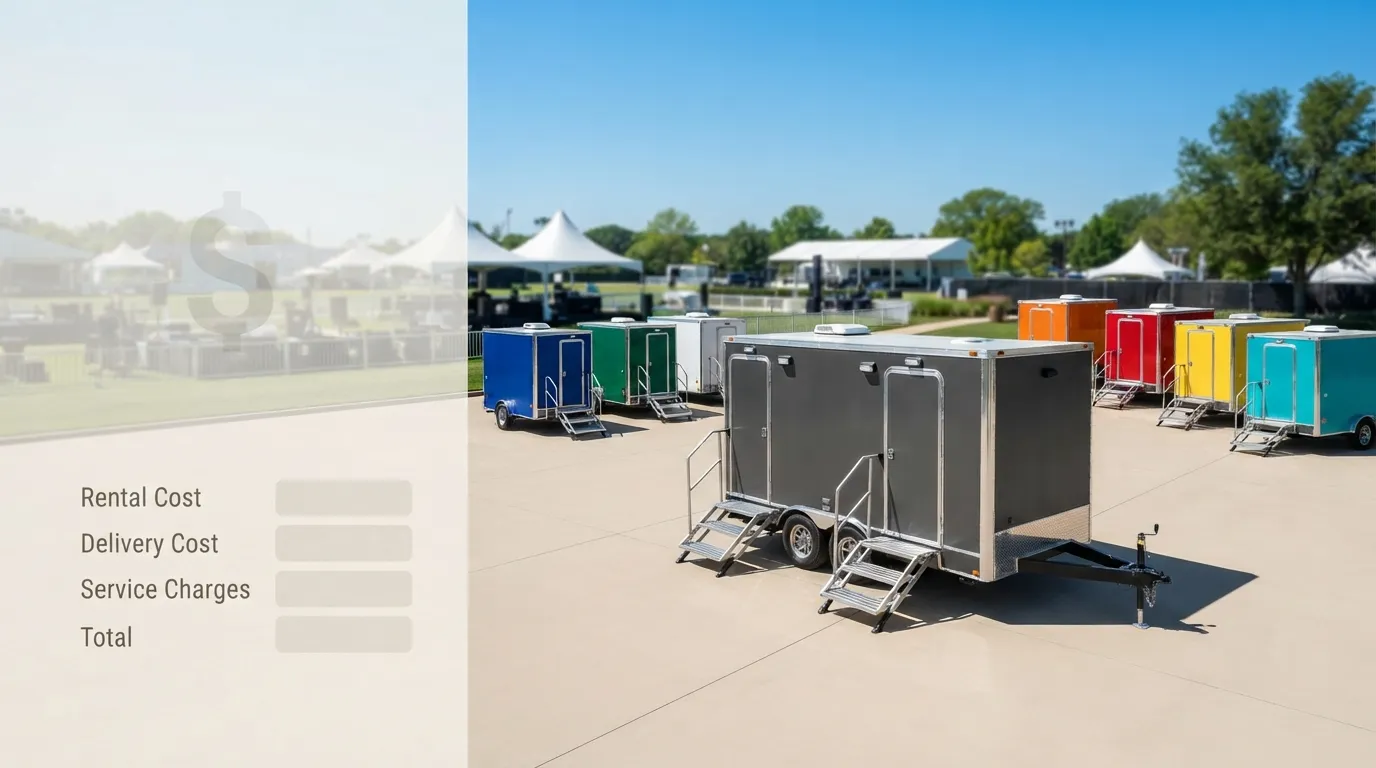
If your event has running water fixtures already, a trailer with a holding tank may need septic service partway through a multi-day rental, and a construction site with an existing system may just need septic pumping service instead of new units. A typical residential tank gets pumped every 3 to 5 years depending on tank size and household size, but jobsite holding tanks and grease interceptors run on a different clock. A grease interceptor gets pumped once fats, oils, grease and solids reach 25 percent of liquid depth, which is worth knowing if you are running a food trailer at an event near Monterey Park, 2.7 miles northeast of East Los Angeles. For longer projects, ANSI/PSAI Z4.3 sets the baseline service interval at once weekly for up to 10 users over a 40 hour week, more often once usage climbs. Pair a unit order with a temporary fence rental or dumpster rental if the site also needs debris control, since OSHA 1926.25 requires scrap and debris cleared from work areas regardless of restroom count.
| unit | duration | typical price |
|---|---|---|
| standard | day | $150 |
| standard | week | $200 |
| ada | day | $230 |
| deluxe | week | $250 |
| trailer | weekend | $2,000 |
How far in advance should I book?
Two to three days covers a standard job in East Los Angeles, but events during peak weekends fill faster. If your date is closer than that, call the emergency porta potty rental line before assuming nothing is available.
Do I need a permit for a porta potty in East Los Angeles?
Maybe, depending on where the unit sits. Placement in the public right of way needs confirming with the city directly. See porta potty permit requirements before delivery day, and do not assume driveway placement skips the question.
How often does the unit get serviced?
Weekly is the standard baseline for lighter use, per ANSI/PSAI Z4.3. High-traffic construction or event sites often need two or three visits a week. Check how often are porta potties cleaned for the breakdown by use case.
What is the difference between a standard unit and a deluxe unit?
A standard unit is a basic non-flush toilet on a 60 to 70 gallon tank. A deluxe unit flushes and often includes a sink. Compare both on deluxe flushable porta potty before booking for a wedding or corporate event.
Can I rent just one unit for a small backyard project?
Yes. A single standard unit covers most home renovation jobs and small gatherings. Check home renovation porta potty for sizing guidance, and confirm delivery clearance since even one unit needs a clear path to place it.
Next step
Get a delivery date
Tell us the address, the dates and the headcount. We size the order and confirm the route.