
How Many Porta Potties Do I Need on an OSHA Job Site?
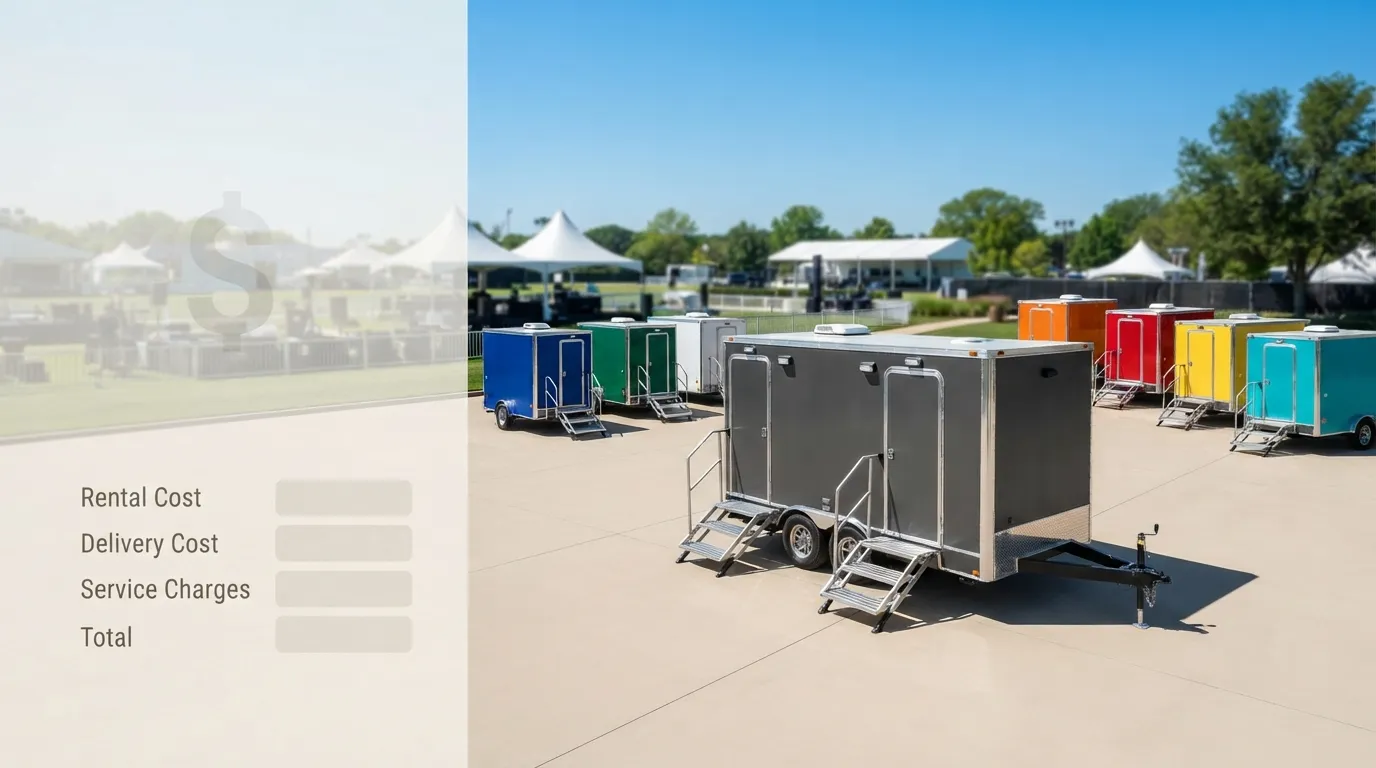
Start with the headcount, not the square footage. OSHA 1926.51(c)(1) is a table, not a guess: 1 facility per 20 workers up to 20, then 1 toilet seat and 1 urinal per 40 workers between 20 and 200, dropping to 1 per 50 once the crew tops 200. A 15-person crew on a East Los Angeles remodel needs one unit. A 90-person crew needs three or four, depending how you split the urinal count. Our how many porta potties do I need guide walks the math for mixed trades and staggered shifts. Most East Los Angeles job sites we service land in the 10 to 60 worker range, which puts them solidly in the second tier of the table. Order early. A standard unit rental runs day, week or month, and pricing is on our porta potty rental cost page. For sites near Monterey Park, 2.7 miles northeast, or Alhambra, 5.0 miles northeast, delivery windows are short enough that a last-minute headcount change rarely blows a schedule.
What Does Cal OSHA Add to the Federal Portable Toilet Requirements?
Cal OSHA generally mirrors the federal ratio in 1926.51(c)(1) but California enforcement leans harder on maintaining the units once they are placed, not just delivering the right count. That means service frequency matters as much as unit math. ANSI/PSAI Z4.3 sets a baseline service interval of once weekly for up to 10 users across a 40 hour week, and busier East Los Angeles sites need more frequent pumping to stay compliant in practice. Check our how often are porta potties cleaned page for what that looks like on a working schedule. Field crews in agriculture follow a separate standard, 1928.110, which calls for one facility per 20 workers within a quarter mile walk, plus potable water. If your operation sits outside standard construction, our farm and agricultural restrooms page covers that distinction. Cal OSHA inspectors care about handwashing too. Water requirements trace back to 1926.51(a)(1), which requires an adequate supply of potable water at every place of employment, separate from toilet count entirely.
What Are the OSHA Portable Toilet Distance Requirements on a Job Site?
OSHA does not publish a hard distance number for construction toilets the way agriculture does under 1928.110. Placement is judged on reasonable access, not a measured radius. Our porta potty placement guide covers ground stability, service truck clearance and keeping units out of designated walkways. A roll-off delivery needs about 60 feet of straight clearance behind the truck, and portable toilets need similar thought if they are staged near a roll-off dumpster rental or temporary fence rental perimeter. If any worker on your East Los Angeles site needs an accessible unit, ADA Standards 213.2 requires at least 5 percent of clustered single-user units be accessible, never fewer than one. That accessible unit needs a 60 inch turning circle per ADA 304.3.1 and a 32 inch clear door opening per ADA 404.2.3. See our ADA accessible porta potty page for full specs.
Does Handwashing Fall Under the Same OSHA Portable Toilet Requirements?
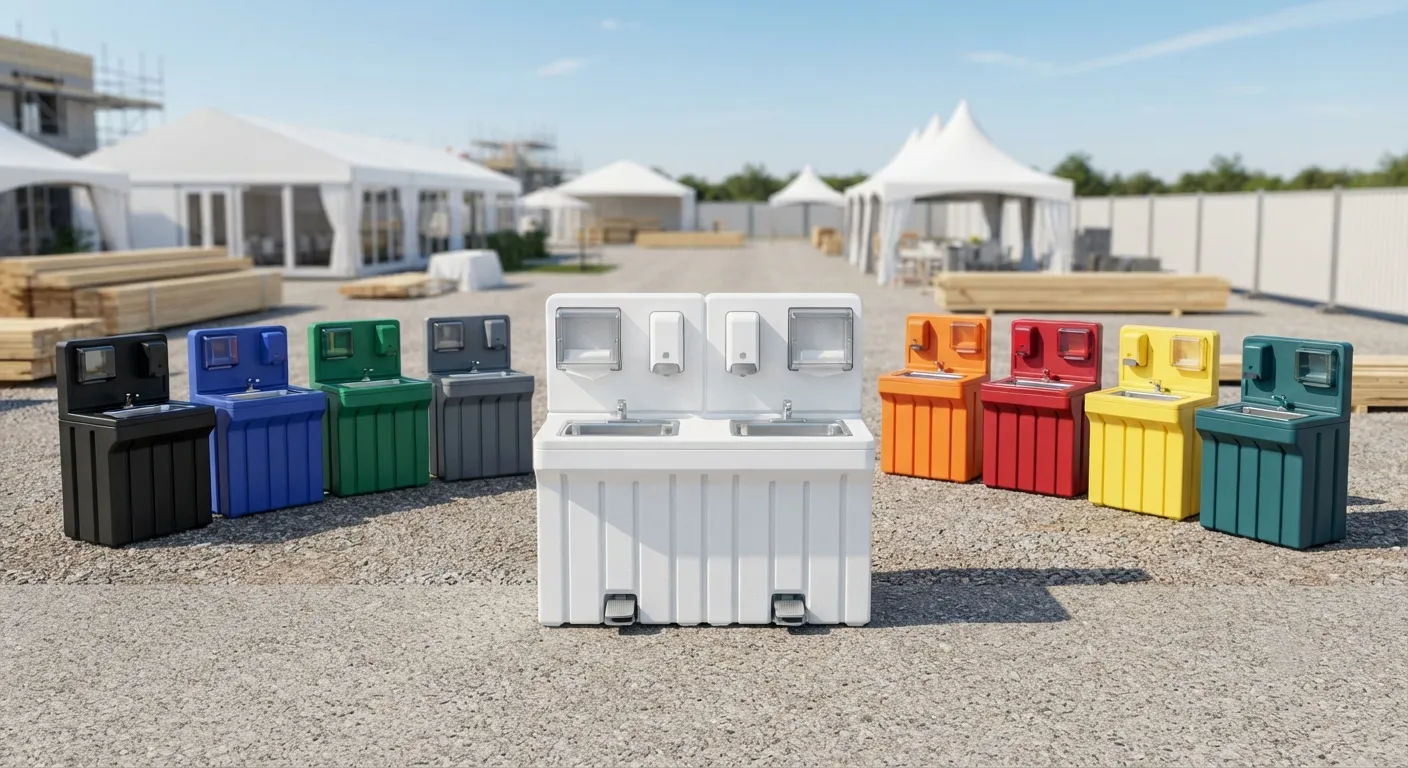
No, handwashing is a separate obligation and it depends on the work. General sanitation and toilet counts sit under 1926.51(c). Washing facilities tied to paints, coatings, herbicides or insecticides fall under 1926.51(f)(1), which requires washing stations wherever those contaminants are present, not as a blanket rule for every trade. Our handwashing station rental page breaks down which East Los Angeles job types actually trigger it. If your crew is general industry rather than construction, 1910.141(c)(1)(i) governs toilet ratios instead, and 29 CFR 1910.141(d)(2) requires soap and towels or a hand dryer at every washing station, hand sanitizer does not satisfy it. A portable sink rental or hand sanitizer station rental covers different needs, so match the unit to the actual requirement rather than guessing. Crews near Rosemead, 7.4 miles northeast, or Pico Rivera, 7.6 miles southeast, often run mixed scopes that trigger both standards on one site.
Standard unit specs stay the same across every job: a 60 to 70 gallon holding tank, a footprint of about 44 by 48 inches, standing roughly 92 inches tall. That consistency makes it easier to plan placement against OSHA's access rules once headcount is settled. For a broader look at everything above, our OSHA portable toilet requirements hub page connects to construction site services, temporary power pole and light tower rental options that often get ordered alongside toilets on active builds.
How many porta potties does OSHA require for 50 workers?
At 50 workers you are past the 20-person single-unit tier and into the 40-to-200 bracket under 1926.51(c)(1), which calls for a toilet seat and urinal combo. Most East Los Angeles crews at this size order two to three units. See standard porta potty rental for options.
Is a hand sanitizer station enough to meet OSHA handwashing rules?
Not for washing tied to paints, coatings, herbicides or insecticides. 1926.51(f)(1) covers that exposure specifically, and 29 CFR 1910.141(d)(2) requires soap plus towels or a dryer. Sanitizer alone does not satisfy either standard.
Do OSHA portable toilet requirements apply to short jobs?
Yes. OSHA does not exempt short-duration work. A one-day East Los Angeles job with 15 workers still needs at least one unit under 1926.51(c)(1). Check porta potty rental per day for short-term pricing.
What is the OSHA rule for construction toilets versus general industry?
Construction sites follow 1926.51(c)(1). Non-construction workplaces use 1910.141(c)(1)(i) instead. The ratios are similar but the citations differ, and inspectors check which one applies based on the work being performed.
Are ADA-accessible units required on every job site?
Only where units are clustered under ADA 213.2, which requires at least 5 percent accessible, minimum one. A single-unit site with no accessibility need may not trigger it. Confirm specifics through ADA restroom requirements.

Next step
Get a delivery date
Tell us the address, the dates and the headcount. We size the order and confirm the route.