
How Do Porta Potties Work?
A standard unit is a self-contained box, about 44 by 48 inches on the ground and 92 inches tall, sitting over a sealed holding tank. There is no flush mechanism on the basic model. Waste drops straight into the tank, where a blue or green chemical breaks down solids and knocks back odor between visits. That chemical is the same stuff people search for as portable toilet chemicals near me, and it is what makes a unit usable for days without smelling like a construction worker running to porta-potty on a hot afternoon. A vent stack pulls air up and out. Toilet paper sits in a small dispenser inside the door. For anyone comparing this to a standard porta potty rental versus something nicer, the tank and chemical setup is identical, the difference is finish and features. Pricing runs by duration, and a full breakdown lives on the porta potty rental cost page if you want the numbers before you call.
How Do Flushable Porta Potties Work?
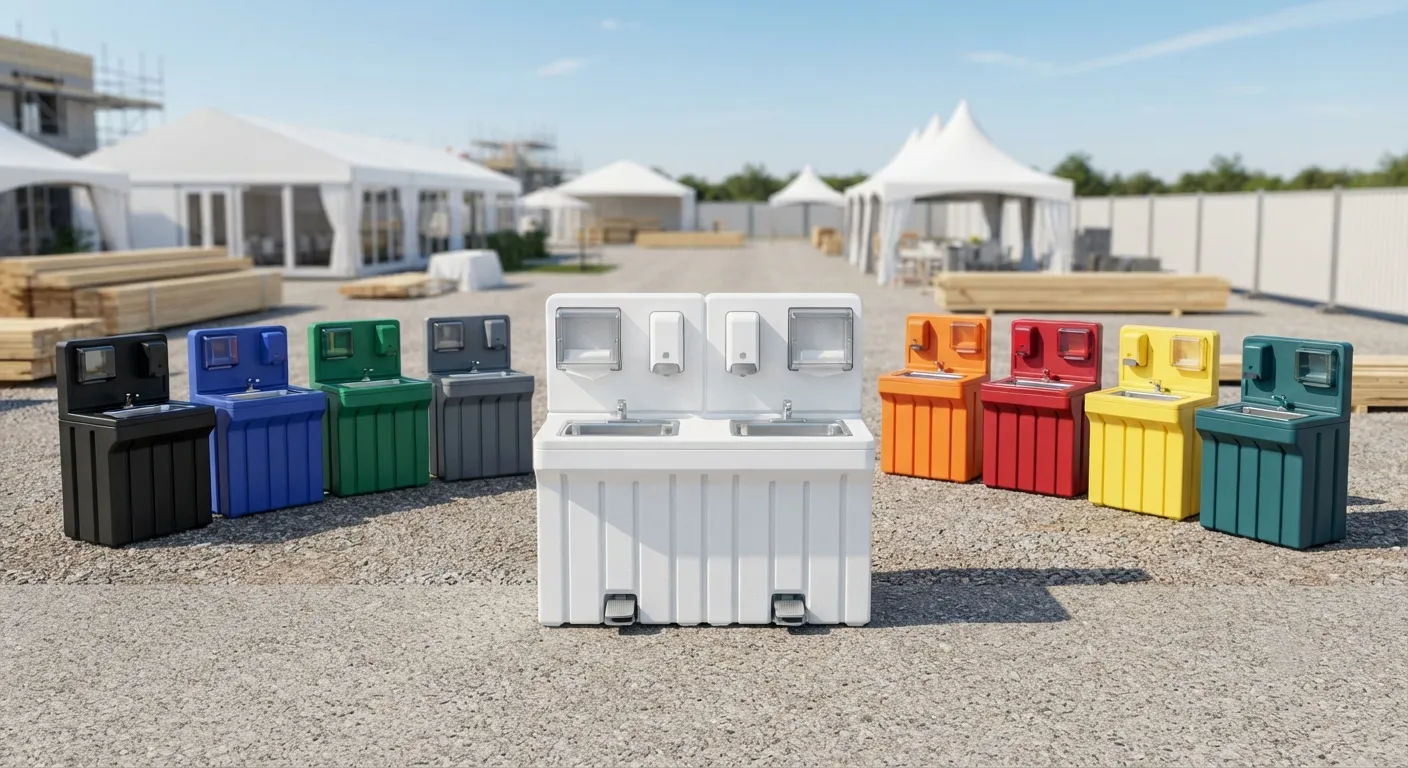
A deluxe flushable unit adds a small onboard freshwater tank and a foot pump or pressurized flush that rinses the bowl into the same holding tank below. It still is not plumbed to a sewer. It just moves waste out of sight and adds a sink for handwashing, sometimes with a soap dispenser tied to the same water tank. That is also how a portable sink works on its own, as a stand-alone unit: fresh water in one tank, gray water out to a second tank, foot or hand pump in between, no pipes running anywhere. Under 29 CFR 1910.141(d)(2), washing facilities need soap and a way to dry hands, and hand sanitizer alone does not satisfy that. A deluxe flushable porta potty covers that requirement on its own; if you need a stand-alone unit instead, look at portable sink rental or a full handwashing station rental. Weekly deluxe rentals in East Los Angeles run in a mid-range band, cheaper per day than booking single days back to back.
What Happens During Servicing?
A service truck arrives, vacuums the holding tank through a hose, rinses if needed, and refills the chemical charge. ANSI/PSAI Z4.3 sets one weekly visit as the baseline interval for up to 10 users over a 40 hour week, which is why a lot of small job sites in East Los Angeles land on once-a-week service by default. Busier sites, like an event with hundreds of guests or a crew running two shifts, need more frequent pumping, more units, or both. This is the same idea behind septic tank cleaning chemicals used in home systems: they manage the same fats, solids, and odor problem, just at a bigger scale. Full details on cleaning frequency sit on how often are porta potties cleaned. If you are trying to figure out unit count instead of service interval, how many porta potties do I need walks through that math, and OSHA's own ratio is worth knowing directly.
What Does OSHA Require on a Job Site?
OSHA 1926.51(c) sets the baseline: one toilet facility for 20 workers or fewer, then one toilet seat and one urinal per 40 workers as the crew grows past that, dropping to one per 50 once you hit 200 workers or more. OSHA 1926.51(a)(1) also requires an adequate supply of potable water at every place of employment, which is part of why a jobsite orders a handwashing station rental alongside toilets rather than treating it as optional. Note that OSHA 1926.51(f)(1) only kicks in where workers apply paints, coatings, herbicides or insecticides, not as a general handwashing rule. Full citations and how they apply to a real crew size are laid out on OSHA portable toilet requirements. For general contractors managing a full site in East Los Angeles, this ties into construction site services alongside dumpsters, fencing and power. Placement also matters: units need a stable, clear path in, which is covered on porta potty placement guide.

How Do Camping Porta Potties Work?
Camping and event units work the same way as job-site units: sealed tank, chemical charge, vented stack, no plumbing needed. The difference is mostly footprint and finish, since event organizers often want cleaner units placed closer together for guest flow. An event restroom rental or festival restroom rental setup in East Los Angeles typically mixes standard units with at least one ADA-accessible unit, since ADA Standards section 213.2 requires at least 5 percent of clustered single-user toilets to be accessible, with a minimum of one no matter how small the cluster. That accessible unit needs a 60 inch turning circle per ADA 304.3.1 and a 32 inch clear door opening under ADA 404.2.3. See ADA accessible porta potty for the full spec list, or camping porta potty for outdoor and remote setups specifically.
Do porta potties need to be hooked up to water or sewer?
No. A standard unit is fully self-contained, holding waste in its own tank and using chemical treatment instead of a flush-and-pipe system. Deluxe units add an onboard freshwater tank for flushing and handwashing, but that water tank is separate from any building line.
How often does a porta potty get pumped?
ANSI/PSAI Z4.3 sets one weekly service as the standard baseline for up to 10 users across a 40 hour week. High-traffic events or larger crews in East Los Angeles need more frequent visits, sometimes daily, which East Los Angeles Porta Pros scopes out before delivery.
What chemical is used inside a porta potty?
A blue or green deodorizing chemical goes into the tank to break down waste and control odor between services. It is not the same as septic tank cleaning chemicals used residentially, though both manage similar bacterial and odor issues.
Can a porta potty freeze or overheat?
Both extremes affect service intervals more than the unit itself. Heat speeds odor buildup, so more frequent pumping helps. Cold slows the chemical's effectiveness. Details specific to seasonal issues are covered on porta potty in winter.
Do I need an ADA unit at my site?
If you are clustering multiple single-user toilets, ADA Standards 213.2 requires at least one accessible unit regardless of total count. Full requirements, including reach ranges under ADA 308.2.1, are on ADA restroom requirements.
Next step
Get a delivery date
Tell us the address, the dates and the headcount. We size the order and confirm the route.